
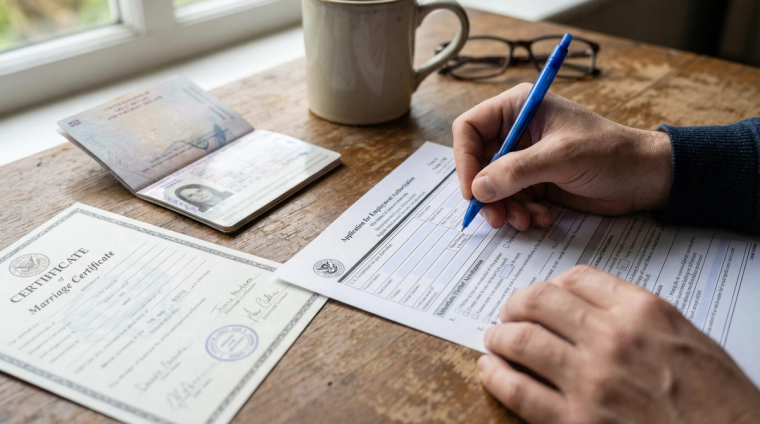
You can file your H-4 EAD application yourself and keep $1,500 to $5,000 in your pocket. Here's how.
Immigration attorneys charge $1,500 to $5,000 to file an H-4 EAD application for you. But no law requires you to hire one. It's a single form with supporting documents, and USCIS accepts self-filed applications every day. This guide covers your actual costs, the filing process, and when it does (and doesn't) make sense to go it alone. If you want a full overview of the H-4 EAD program first, read our complete H-4 EAD guide for 2026. And if you'd rather have guided help at a lower cost than an attorney, Immiva's H-4 EAD preparation service walks you through the whole application for a fraction of typical attorney fees.
Do You Actually Need a Lawyer for H-4 EAD?
The short answer: most people don't. The H-4 EAD application is documentation-based, not discretionary. That means USCIS isn't making a judgment call about your case. They're checking whether you submitted the right form, the right documents, and meet the eligibility requirements (8 CFR § 274a.12(c)(26)). If everything checks out, you're approved. If something is missing, you get a Request for Evidence.
Immigration attorneys themselves say this. On legal advice platforms, lawyers have stated that there's no prohibition against filing for employment authorization on your own. On immigration forums, attorneys have called the H-4 EAD a "simple application." And on community boards like Trackitt and Reddit, hundreds of H-4 spouses share successful self-filing experiences.
So why do people hire lawyers? Usually it's fear of making a mistake. And that's understandable. But the most common application mistakes, like using the wrong form edition or selecting the incorrect eligibility category, aren't things a lawyer magically prevents. They're things you can avoid by following clear instructions. We've listed the most frequent errors in our H-4 EAD application mistakes guide.
How Much Does H-4 EAD Really Cost? The Full Breakdown
What each filing path actually costs in 2026:
| Filing Method | USCIS Fee | Service Fee | Other Costs | Total |
|---|---|---|---|---|
| Full DIY | $520 | $0 | ~$35 | ~$555 |
| Immiva Guided Filing | $520 | A fraction of attorney cost | ~$35 | USCIS fee + service fee |
| Attorney (Low End) | $520 | $1,500-$2,500 | ~$35 | ~$2,055-$3,055 |
| Attorney (Average) | $520 | $2,500-$3,500 | ~$35 | ~$3,055-$4,055 |
| Attorney (High End) | $520 | $3,500-$5,000 | ~$35 | ~$4,055-$5,555 |
For H-4 EAD (c)(26) filings, the USCIS filing fee for Form I-765 is $520 (paper filing). Biometrics costs are built into the main form fee for most applicants. The "other costs" include passport photos ($7-$17), certified mail ($9-$11), and document copies ($5-$15). If you need a certified translation for a foreign-language marriage certificate, add $50-$100.
Immiva costs a fraction of what an attorney charges for the same filing. Details are on our pricing page.
Before you file, make sure you actually qualify. Your H-1B spouse needs an approved I-140 or an H-1B extension beyond 6 years under AC21. Not sure which applies? Our eligibility guide walks through both paths.
Filing means downloading the right I-765 form, filling it out with category (c)(26), pulling together your documents, and mailing the package to the correct USCIS lockbox. Our complete H-4 EAD guide has the full step-by-step walkthrough.
Several 2026 policy changes affect H-4 EAD filings, from the auto-extension elimination to new form requirements. Our complete H-4 EAD guide covers what's changed.
Most rejections come down to the same few errors: wrong form edition, wrong eligibility category, or paying by check (which USCIS stopped accepting in late 2025). Our H-4 EAD application mistakes guide covers the full list and how to avoid each one.
When You Should Hire a Lawyer
Filing without a lawyer works for most H-4 EAD applicants. But some situations do need professional help. Consider an immigration attorney if:
- Your spouse's I-140 was withdrawn by the employer or revoked by USCIS
- You have gaps in your immigration status (time between H-1B/H-4 approvals)
- You have previous immigration violations such as unlawful presence or unauthorized employment
- You have a criminal history that must be disclosed
- You received a complex RFE you're not sure how to answer
- You're filing concurrently with Form I-485 (which uses a different category code)
- You have prior visa denials or deportation/removal proceedings
If none of those apply to you, you don't need a lawyer. File on your own, or use Immiva's guided filing: it builds the form field by field, checks every answer, and costs far less than an attorney.
What Happens If Something Goes Wrong?
There's an important difference between a rejection and a denial:
A rejection happens at the lockbox intake stage, usually because of a wrong fee, missing signature, or outdated form. Your application is returned, no USCIS record is created, and your fee is refunded. You fix the error and refile immediately.
A denial happens after an officer reviews your case and finds you ineligible or your evidence insufficient. This creates a formal record. Your fee is not refunded. You can file a Motion to Reopen or Reconsider (Form I-290B, $675 filing fee, within 30 days) or refile with a new $520 fee.
If you receive a Request for Evidence (RFE), you'll have 30 to 90 days to respond. Submit one comprehensive response with everything requested. An incomplete or late response leads to denial.